Top 10 Industrial Equipment Types to Minimize Material Loss?

Time:2026-10-02 Author:Oliver
0%

Material loss can quietly erode production margins, product quality, and environmental performance. A fine powder may cling to a transfer chute, remain inside a mixer, or escape during bag filling. Small losses matter. They accumulate across every shift.

This guide examines ten industrial equipment types that help minimize material loss in industrial processing equipment. The list covers conveyors, feeders, hoppers, screens, mills, mixers, dryers, separators, dust collectors, and filling systems. Each type affects material control differently. Conveyors need suitable belt profiles and sealed transfer points. Feeders require stable flow rates and accurate calibration. Hoppers perform better when their angles prevent bridging and stagnant zones. These details often decide whether usable material reaches the final package.

The discussion is based on practical engineering considerations, operating observations, and established maintenance principles. It considers containment, wear, cleanability, energy use, and measurement accuracy. Operators should compare equipment performance with actual loss records, not rely only on supplier claims. A dust collector may capture airborne particles, but poor duct design can still reduce recovery. A high-efficiency screen may improve separation while increasing breakage if settings are unsuitable.

No machine is perfect. Real plants face moisture changes, inconsistent feedstock, rushed cleaning, and human error. This guide acknowledges those weaknesses instead of promising effortless savings. Careful inspection, documented trials, and regular calibration remain essential. The right equipment, correctly specified and maintained, can protect valuable materials from receiving through final dispatch.
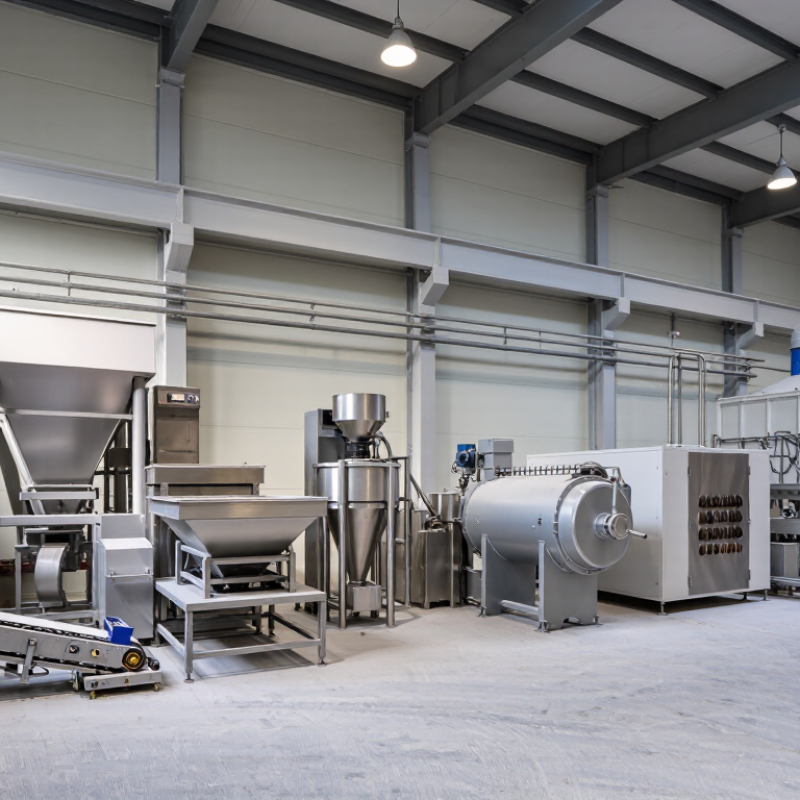
Top 10 Industrial Equipment Types to Minimize Material Loss?

Define Material Loss with ISO 22400 KPIs: Yield, Scrap Rate, and OEE

Material loss becomes measurable when equipment performance is connected to ISO 22400 KPIs. The framework supports consistent definitions for Yield, Scrap Rate, and OEE across production operations.

Track yield after machining, cutting, molding, welding, coating, heat treatment, packaging, and inspection. These ten equipment types often reveal different loss patterns.

A CNC machine may create excess chips, while a molding press may produce startup rejects. A conveyor can damage parts through poor alignment. A furnace may cause distortion through unstable temperature control.

Yield measures acceptable output against total input. Scrap Rate measures material rejected or made unusable. OEE combines availability, performance, and quality. Use one agreed formula, clear data boundaries, and the same shift rules. Otherwise, two departments may report different truths.

ISO 22400 helps structure the discussion, but each factory must document its own loss definitions. That part is often underestimated. A practical review should compare hourly input, good units, rework, scrap weight, downtime, and cycle time. Operators should verify unusual readings before managers change settings.

Tips: Weigh scrap at the source, not at the end of the day. Mark the exact machine, batch, cause, and time. Compare trends, not isolated numbers. A high OEE can still hide expensive material loss when input weights are missing. Review the KPI design monthly, because production reality changes. Perfect data is unlikely. Better questions are still valuable.

Precision Cutters and CNC Machines: Improve Nesting Efficiency and Reduce Scrap

Precision cutters and CNC machines play a direct role in reducing material loss during fabrication. In a busy metal shop, a small nesting error can leave costly strips beside every finished part. Accurate cutting paths place components closer together while respecting kerf width, heat distortion, and tool clearance. Every millimeter matters.

Modern nesting software can rotate parts, use common-line cutting, and preserve useful remnants for future orders. CNC systems then follow these layouts with repeatable speed and positioning. Operators should confirm sheet thickness, cutting parameters, and machine calibration before production. A misplaced zero point can ruin an entire sheet. That mistake still happens.

Practical teams measure scrap by job, not by guesswork. They compare planned yield with actual offcuts and record why material was rejected. Warped sheets, blunt tools, and rushed setup often explain the gap. Precision cutters also help with irregular shapes, where manual cutting may create uneven edges and extra finishing work. However, tighter nesting is not always better. Parts need enough spacing for safe cutting and reliable heat control. Overcrowded layouts may increase distortion, even when the software reports excellent yield. Regular maintenance, operator judgment, and careful review keep efficiency realistic.

Conveyors, Feeders, and Hoppers: Control Spillage and Flow-Related Losses

Conveyors, feeders, and hoppers are often treated as simple transfer equipment. In practice, they control where material lands, how fast it moves, and what escapes. Field audits frequently find losses at transfer points, skirt edges, impact zones, and poorly sealed hopper outlets. Small leaks matter.

The FAO’s The State of Food and Agriculture 2019 estimated that 14% of global food production is lost between harvest and retail. This figure is not limited to conveyor systems, but it shows the scale of handling-related waste. A properly designed hopper should maintain a steady flow, reduce bridging, and prevent sudden surges into the feeder. Variable-speed feeders can then match conveyor capacity and reduce overflowing. Keep the feed stable.

CEMA guidance emphasizes correct belt loading, controlled transfer geometry, and adequate sealing for bulk material conveyors. Practical inspections should check belt alignment, skirt pressure, chute wear, and dust escaping around loading points. The UNEP Food Waste Index Report 2024 estimated 1.05 billion tonnes of food waste in 2022, reinforcing the need for tighter material control across supply chains. However, equipment settings alone cannot solve every loss. Moisture changes, operator habits, and inaccurate flow measurements still create problems. A clean floor may look efficient, yet hidden carryback can remain inside return systems. Measure actual throughput, inspect after shutdowns, and question “normal” spillage. My own view is less comfortable: many plants repair visible leaks while accepting avoidable design weaknesses.

Scales, Vision Sorters, and Metal Detectors: Verify 95%+ Product Accuracy

Material loss often begins with a small measurement error, not a dramatic equipment failure. A scale that drifts by two grams can create expensive giveaway across thousands of packs. Calibrate it during each production shift, then compare readings with certified test weights. Record temperature, vibration, and belt speed too. They quietly influence results.

Vision sorters inspect color, shape, size, and surface defects at production speed. Metal detectors provide another control point for ferrous and non-ferrous contamination. Used together, these systems can support 95%+ product accuracy, but that figure must be verified on-site. It should not remain a brochure promise. Challenge tests, rejected-product checks, and hourly sample reviews reveal real performance. Imperfect data is still useful.

The Food and Agriculture Organization reported that 14% of food is lost between harvest and retail in The State of Food and Agriculture 2019. The United Nations Environment Programme estimated 1.05 billion tonnes of food waste in 2022, according to its Food Waste Index Report 2024. These figures show why accurate weighing and inspection matter beyond factory efficiency.

A practical line may combine automatic scales, vision sorting, and metal detection before final packing. Operators should review false rejects as carefully as missed defects. Too much caution can also increase material loss. Calibration records, traceability logs, and periodic validation turn equipment readings into dependable process evidence.

Reclaimers, Dust Collectors, Compactors, and Closed Loops: Apply EPA Waste Hierarchy

Material loss often begins with a small spill, airborne dust, or an overloaded container. The right equipment can keep valuable material inside the process. A practical top-ten setup includes reclaimers, dust collectors, compactors, conveyors, screens, separators, crushers, balers, weighing systems, and closed-loop recovery units. However, equipment should follow the EPA Waste Hierarchy. Source reduction and reuse rank above recycling, energy recovery, treatment, and disposal (U.S. EPA, Sustainable Materials Management).

Reclaimers return off-spec material to production. Dust collectors capture fine particles near transfer points, where a visible cloud signals poor containment. Compactors reduce storage volume, but they should not hide contamination or moisture problems. Closed loops go further by filtering process water, recovering solids, and returning usable material to the same operation.

The World Bank estimates that global waste generation reached 2.01 billion tonnes in 2016, with at least 33% unmanaged (What a Waste 2.0). That figure shows the scale, but plant-level losses are often less obvious. A few kilograms per shift can become several tonnes annually.

Tips: Measure input, recovered output, dust capture, and disposal weight separately. Check seals, ducts, screens, and bins weekly. Use weighing data before buying larger equipment. A perfect recovery rate is rarely real. Some systems consume extra energy, and that trade-off deserves review. Revisit the design after three months, because operators may bypass equipment that slows production.

FAQS

How is material loss measured in production?

Measure total input, good output, rework, scrap, downtime, and cycle time. Start at the source. Record each result by machine, batch, cause, and time.

What does Yield show?

Yield compares acceptable output with total material input. A simple formula is: Yield = good output ÷ total input. Check yield after cutting, molding, welding, coating, or inspection.

What does Scrap Rate measure?

Scrap Rate shows material rejected or made unusable. Record scrap weight separately from rework and recovered material. A small daily loss can become several tonnes each year.

What is OEE, and can it hide material loss?

OEE combines availability, performance, and quality. A high OEE may still hide costly losses when input weights are missing. That weakness deserves attention.

Why can two departments report different loss figures?

They may use different formulas, shift rules, or data boundaries. Agree on one formula and one reporting period. Numbers can disagree.

Which equipment commonly creates material loss?

Cutting equipment may create excess chips. Molding equipment can produce startup rejects. Poor conveyor alignment may damage parts. Unstable furnace temperatures can cause distortion.

How can factories reduce and recover material loss?

Prevent loss before recovery whenever possible. Reuse suitable off-spec material, then consider screening, separation, compaction, or recycling. Closed loops can filter process water and return usable solids.

How should recovery systems be checked?

Weigh input, recovered output, captured dust, and disposal separately. Inspect seals, ducts, screens, and bins each week. Perfect recovery is unlikely. Some systems use extra energy or slow production, so review the trade-off.

Conclusion

Minimize material loss in industrial processing equipment by combining measurable performance indicators with targeted process controls. ISO 22400-inspired KPIs such as yield, scrap rate, and OEE help teams identify where materials are being wasted and whether improvements are delivering results. Precision cutters and CNC machines can optimize nesting and cutting patterns, while properly designed conveyors, feeders, and hoppers reduce spillage, blockages, and inconsistent flow.

Accurate scales, vision-based sorters, and metal detectors strengthen quality verification and help maintain product accuracy above 95%, reducing rework and rejected batches. Reclaimers, dust collectors, and compactors can recover usable materials, control airborne particles, and reduce disposal volume. When these systems are connected through closed-loop recovery processes and guided by the waste hierarchy, facilities can improve resource efficiency, lower operating costs, and support more consistent, sustainable production.

Oliver

Oliver

Oliver is a seasoned marketing professional with a wealth of expertise in driving brand awareness and engagement. With a deep understanding of our company's product offerings, he consistently delivers high-quality content that enriches our professional blog. His insights not only shed light on......